![colorado-home-services-logo[1].png](https://static.wixstatic.com/media/6b37c4_fdeb15acb4d043e2b986abc5a182e022~mv2.png/v1/fill/w_152,h_142,al_c,q_85,usm_0.66_1.00_0.01,enc_avif,quality_auto/colorado-home-services-logo%5B1%5D.png)
Fall Home Maintenance Checklist for Colorado Homeowners


Colorado fall is short. We get a stretch of perfect weather, then a hard freeze arrives sometime in October and the furnace runs for the first time in months.
That gap is the useful part. The things below are all easier, cheaper, and less urgent to handle now than they are in January, when the same problems show up as an emergency call.
Here are six fall home maintenance items worth thinking about, and why each one matters here specifically.
1. Insulation and Air Sealing

Why now: this is the highest-impact item on the list, and it gets harder to schedule once cold weather hits and everyone else has noticed their drafts.
Colorado's climate is demanding in both directions. The same attic that lets heat escape in January lets it in during July, so this is one of the few improvements that works year-round rather than for one season.
Two things worth understanding, because they get confused. Insulation slows heat transfer.
Air sealing stops air from moving through gaps in the building envelope. They are different problems with different fixes, and doing one without the other leaves most of the benefit on the table. Insulation with air moving through it performs well below its rated R-value.
Common leak points in Front Range homes are attic top plates, ceiling penetrations around light fixtures, the attic hatch, and basement rim joists. None of them are visible without looking.
Worth knowing: Xcel Energy offers rebates on qualifying insulation and air sealing work, and the improvements can count toward the Whole Home Efficiency program if you are planning more than one project.
2. Attic Ventilation
Why now: ventilation problems are invisible until they cause damage, and the damage happens in winter.
An attic needs to breathe. Proper ventilation means balanced intake at the eaves and exhaust near the ridge, so air moves continuously through the space.
In summer that dumps superheated air and reduces the load on your cooling. In winter it does something more important: it removes moisture. Warm, humid air rises out of your living space into the attic, and if it cannot escape, it condenses on the cold underside of the roof deck. Over a season that produces mold, rot, and compressed insulation that no longer works.
Poor attic ventilation is also a contributor to ice dams, where snow melts against a warm roof, runs to the cold eave, and refreezes.
One important interaction: if you are adding insulation, the ventilation needs to be checked at the same time. Insulating a poorly ventilated attic can make a moisture problem worse, which is why a good assessment looks at both together.
3. Electrical

Why now: household electrical load goes up in winter, and that is when marginal problems stop being marginal.
Space heaters, holiday lighting, more hours indoors with more devices running. A panel that has been fine all year can start tripping in December, and an aging circuit that was merely old becomes a hazard under sustained load.
Things worth addressing before winter:
Breakers that trip repeatedly, which is a symptom rather than a nuisance
Outlets that feel warm, or switches that buzz
A panel that is full, aging, or a brand with known issues
Outdoor outlets and GFCI protection, ahead of holiday lighting
Any repair you have been putting off since summer
If you have been considering an electrical panel upgrade or adding an EV charger, fall is a better time than spring. Schedules are more open, and the work is not competing with an emergency.
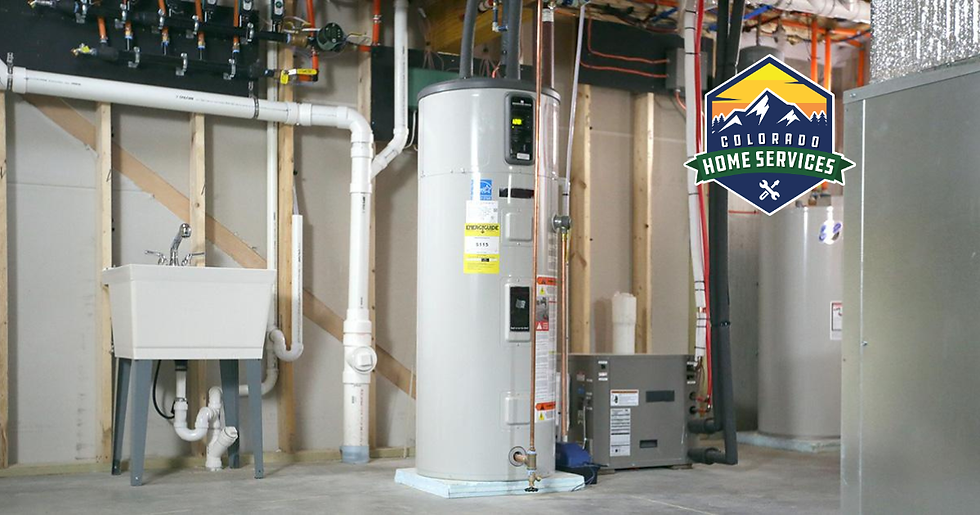
4. Water Heater
Why now: hot water demand rises in winter, incoming water is colder, and the system works harder to deliver the same result.
Two things to pay attention to.
Sediment. Colorado's hard water leaves mineral buildup in the bottom of a tank, which insulates the water from the burner and forces longer run times. Annual flushing addresses it. Tankless units get descaled instead, since scale collects on the heat exchanger rather than settling in a tank. We offer tankless descaling as a standalone service.
Age. A tank water heater generally lasts eight to ten years. If yours is in that range, deciding on your own schedule is better than deciding on a Saturday with no hot water and standing water on the floor.
If you are replacing, heat pump water heaters carry substantially larger Xcel rebates than standard units, which changes the math on what looks affordable.
5. Cooling and Ventilation Shutdown
Why now: this one has a deadline, and missing it costs money.
If you run a swamp cooler, it needs to be drained, disconnected, and covered before the first hard freeze. Water left in the lines freezes and splits them, which turns a seasonal task into a spring repair. We do not service swamp coolers ourselves, but we work with partners who do, and we are happy to point you toward one.
Whole house fans need their insulated damper or cover in place. A whole house fan is a large opening between your conditioned living space and a vented attic. Left uncovered, it leaks heated air all winter, and it will quietly undo some of what your new insulation was supposed to accomplish.
Fall is also the sensible time to think about a cooling change rather than in the middle of a July heat wave. If your swamp cooler is aging, or you are considering removal and conversion to refrigerated air, doing that work in the off-season means better scheduling and a system that is ready before you need it.
6. A Home Energy Audit, If You Are Not Sure Where to Start

Everything above assumes you already know what your house needs. Often that is the actual problem.
A cold room might be insulation, an air leak, ductwork, or ventilation. Adding insulation to a house that is mostly leaking air does not fix much. A home energy audit uses blower door testing and thermal imaging to find out which one you are dealing with, and produces a report that tells you what to do first and what can wait.
It is also the required first step for the maximum rebates available through Xcel Energy's Whole Home Efficiency program, so if you are planning more than one improvement, starting there tends to be worth it.
Where to Start on Your Fall Home Maintenance
If you only do one thing this fall, protect your cooling equipment from the freeze. That has a hard deadline and a real repair cost attached.
If you want to make a dent in your winter bills, insulation and air sealing is the highest-impact item on the list.
And if you are not sure which of these apply to your house, that is exactly what an audit answers.
Ready to get ahead of winter?
Have a question first? Contact Colorado Home Services and we'll help you figure out where to start.
Rebate programs, tax incentives, eligibility requirements and equipment qualifications are subject to change. Confirm current program requirements and available incentives before making a purchasing decision.
Related Colorado Home Services Resources
Thinking about efficiency work? See our insulation and air sealing services, or our overview of Colorado and federal home energy rebates.
Planning electrical work before winter? See our electrical services, including panel upgrades and EV chargers.
Want someone looking at the house on a schedule? Our Home Advantage membership includes an annual home evaluation, and evaluations run October through April.
Related Reading: Not sure which improvements your home would benefit from most? Read What Is a Home Energy Audit? A Colorado Homeowner's Guide.


Comments